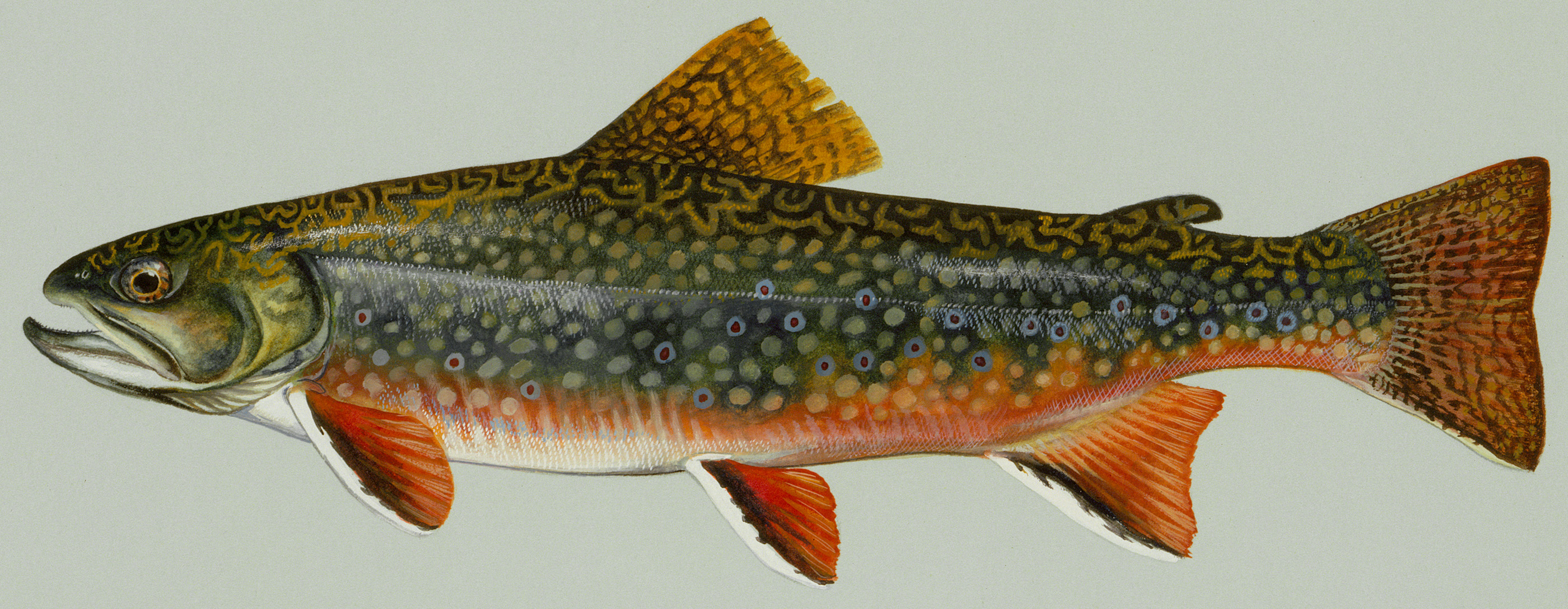
Seasonal Temperature Patterns as Brook Trout Habitat Signals in Alpine Streams
How daily and seasonal temperature fluctuation in Italian mountain streams relates to brook trout distribution and thermal tolerance limits.
Read article →Water temperature, transparency, and channel structure as measurable signals of brook trout presence in the cold-water streams of the Italian Alps and Apennines.
Key Indicators
In mountain streams across Lombardy, Trentino, and the Veneto, field researchers track a specific set of physical and chemical parameters. Together they form a readable profile of habitat suitability for Salvelinus fontinalis.
Water Temperature
Brook trout are stenothermal. Sustained temperatures above 20°C cause physiological stress. Cold, spring-fed headwater streams in Italy's alpine zone remain below threshold through summer months.
Transparency & Clarity
Low turbidity — measurable with a Secchi disk or turbidimeter — correlates with stable substrates and low suspended sediment loads. Clear water supports visual predation and gill function.
Channel Condition
Gravel and cobble substrates in riffle zones provide spawning habitat. Embeddedness (the degree to which coarse sediment is buried in fines) is a practical field-readable channel health metric.
Recent Articles
How daily and seasonal temperature fluctuation in Italian mountain streams relates to brook trout distribution and thermal tolerance limits.
Read article →
The relationship between water transparency, fine sediment inputs, and oxygen saturation in streams where brook trout populations have been recorded.
Read article →
Substrate composition, channel geometry, and flow regime as determinants of spawning habitat availability in the tributaries of northern Italian river basins.
Read article →Context
Salvelinus fontinalis was introduced to Italian mountain streams in the early twentieth century for angling purposes. It has since established stable populations in cold, oligotrophic streams above approximately 800 metres in the Alpine and pre-Alpine regions of Lombardy, Trentino-Alto Adige, and the Veneto.
Its sensitivity to habitat degradation makes it a useful indicator species. Populations are closely tied to local stream conditions — when temperature, clarity, or substrate quality shifts outside the species' tolerance range, populations decline quickly.
Contact
For editorial inquiries, corrections, or to share field data relevant to the topics covered on this site, use the form. Responses are not guaranteed but all messages are read.
Maplebrook Daily — maplebrookdaily.eu
No commercial inquiries are addressed.